
A guide for architects and interior designers
How to check product quality before shipment from China
Set inspection requirements, approve reference samples, choose quality checks, and resolve failures before goods leave China.
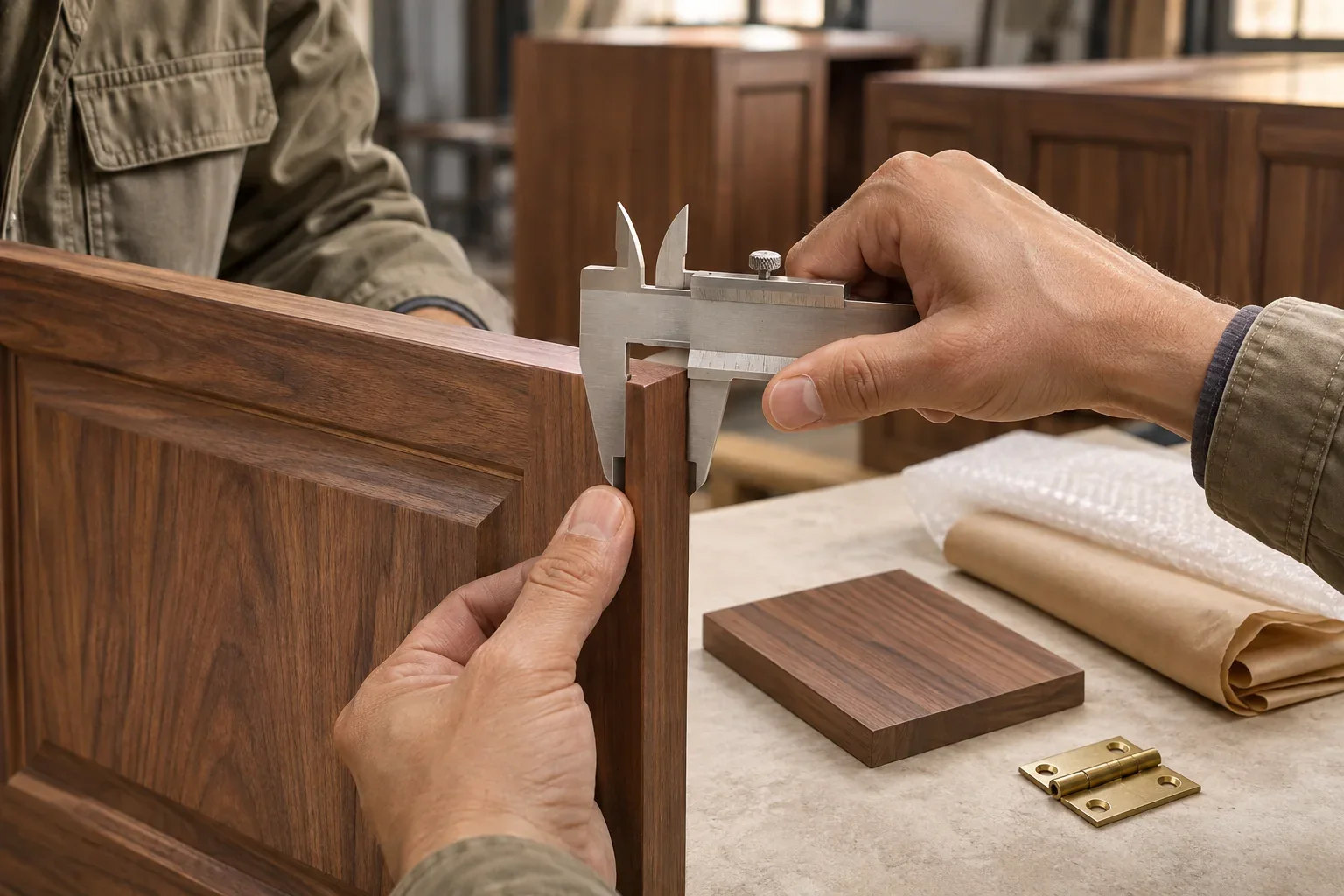
Quality inspection works best when the buyer has already defined what acceptance means. Before production starts, give the supplier and inspector the same specification, approved references, and decision rules.
For a cabinet order, “good quality” leaves the board material, edge finish, hardware, dimensions, and packing open to interpretation. Write the checks so another person can examine the goods and report a useful result.
Turn the product brief into inspection requirements
List the characteristics that matter to the order. Include the correct model, materials, dimensions, finish, components, function, quantity, labels, and packaging. Identify which document or approved sample defines each requirement.
Make tolerances explicit where dimensions vary. Agree the measurement method and units. If a component must fit another product, provide the interface drawing or a reference part where practical.
Some requirements concern safety or regulated performance. Ask a competent specialist which tests and documents are necessary for the intended use and destination. Keep laboratory testing and regulatory conformity work visible in the order plan; an ordinary visual inspection has a different scope.
For destination questions, start with the country sections of the main buying guide and confirm the current requirements for your exact goods with the relevant authority and broker.
Keep an approved sample and a controlled drawing
Label the sample with its approval date, product reference, and accepted specification version. Keep one accessible to the inspector. If the supplier keeps another, confirm that both references match.
Photographs help explain a finish or defect, but lighting and screens affect appearance. Decide how colour, texture, and workmanship will be judged where those features matter. Record accepted variations rather than asking the inspector to infer your preferences.
Issue drawings with revision identifiers. When a change is approved, replace the old inspection reference and ask the supplier to confirm the version in use. A current specification should be easy to identify in the order file.
Choose checks that match the production risk
Different stages answer different questions. A pre-production check can examine materials and preparation. A check during production can reveal problems while work is continuing. A final inspection examines the goods that are ready to ship.
Intertek describes pre-production, during-production, final random inspection, and loading-supervision services. Match the scope to the particular product and the decisions you need to make. Intertek: product quality inspections
Consider an early check when a material substitution would be expensive to fix later. For custom joinery, the time to clarify board type and hardware is before the whole batch is assembled. Reserve the final check for the finished product, its quantity, and its packing.
Confirm how much of the order must be finished and packed for the booked inspection. Providers set readiness conditions; establish yours in advance so an inspector does not arrive to an incomplete batch.
Agree the sampling method and its limits
For a large order, an inspector may examine a sample of units rather than every item. Agree the sampling plan, inspection level, defect categories, acceptance limits, and how functional checks are handled.
ISO 2859-1 describes sampling schemes indexed by an acceptance quality limit, or AQL, for inspection of lots. Ask the inspection provider to specify the applicable method and edition in the inspection instructions. ISO: sampling procedures for inspection by attributes
Sampling supports an acceptance decision about a lot using the agreed plan. The result describes the sample and checks performed; untested items and characteristics remain outside that direct observation. A passed report should not be presented as proof that every unit is defect-free.
For a small batch or a critical characteristic, discuss whether checking every unit is appropriate and technically feasible. Safety requirements may need specialist testing or controls beyond a general inspection. Avoid choosing an AQL simply because it appeared on another buyer’s report.
Give the inspector a complete brief
Send the purchase order, current specification, drawings, sample reference, packing requirements, product list, factory contact, and production status. State which tests are required and who supplies any equipment or fixtures.
The report should identify the order and inspected location, describe readiness, list the checks, show measured results, and document defects with photographs and quantities. Ask for clear reporting of checks that could not be completed.
SGS lists workmanship, function, quantity, packing, labelling, and shipping marks among its final random inspection checks. Use your actual buying requirements to define the report you commission. SGS: final random inspection scope
Confirm who commissions the inspector and who receives the full report. If the supplier arranges the visit, make sure your agreed scope and access to the findings remain explicit.
Make a written decision when something fails
Read the findings before authorising shipment or a payment linked to acceptance. Separate a count discrepancy, cosmetic defect, functional failure, and missing compliance document; each needs a specific response.
Ask for a corrective-action plan describing the affected goods, rework method, completion date, and responsibility for the cost. Decide whether the repaired goods require another inspection or additional testing.
If you accept a deviation, describe it precisely and obtain approval from the person responsible for the design or intended use. Keep it separate from the unchanged requirements. A discount does not resolve a safety issue or a product that cannot be imported or installed.
Check packing and release the shipment deliberately
Confirm carton or crate quantities, protection for vulnerable parts, labels, and packing-list accuracy. Discuss loading supervision when there is a particular risk of the wrong goods being loaded or the packing being damaged during handling.
Keep the approved report and any reinspection evidence with the invoice, packing list, and dispatch authorisation. Send the receiving team the references they need to check arrival. The quality record should travel with the order through delivery and any later claim.