
A guide for architects and interior designers
A hypothetical import order from China: enquiry to delivery
Follow an illustrative furniture order through supplier enquiries, sample approval, inspection, freight booking, and receiving. This is a worked example, not a customer case study.
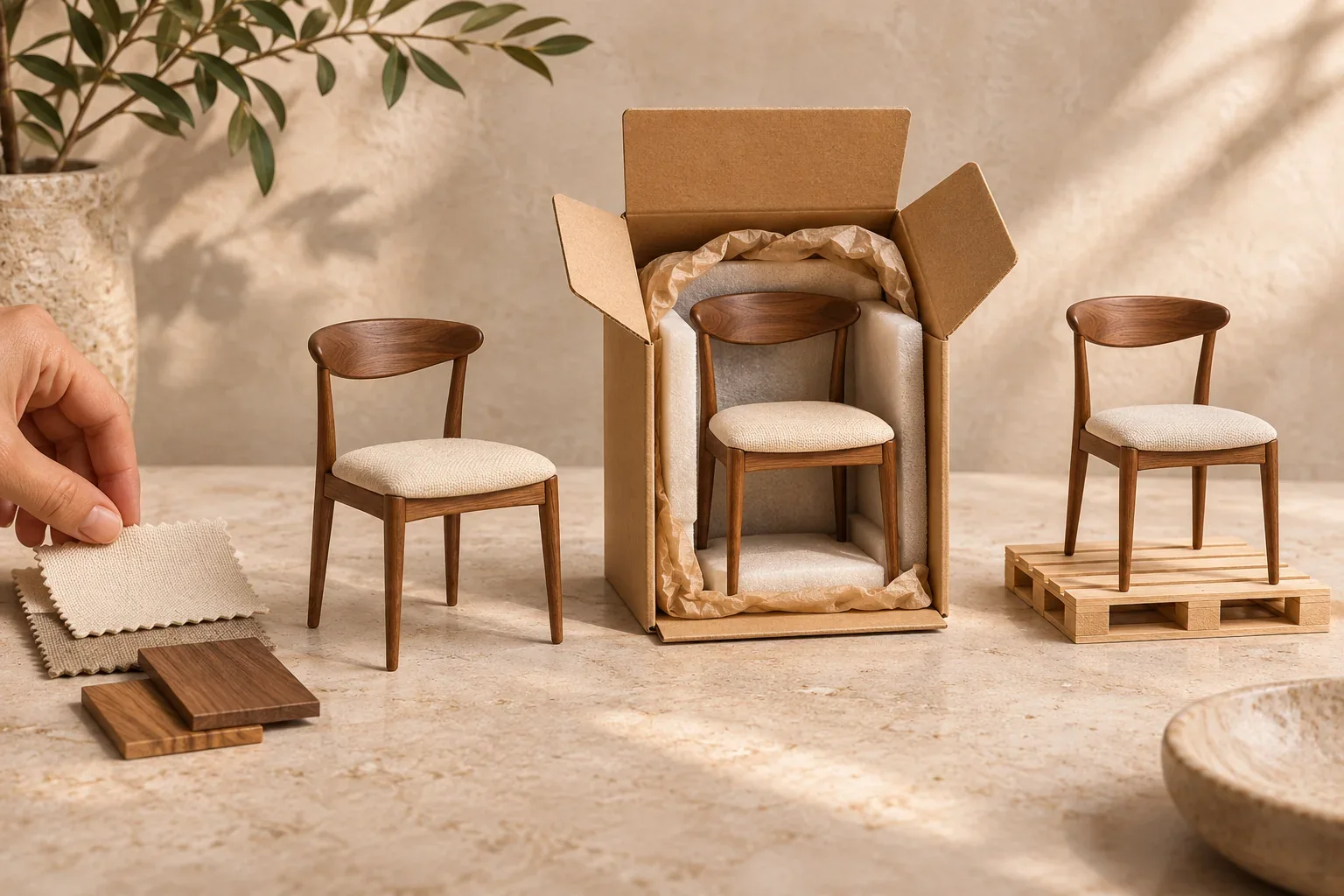
This is a hypothetical worked example. The buyer, products, quantities, prices, and decisions are invented to explain the purchasing process. They describe no customer transaction, current market quotation, or promised outcome. Destination requirements must be checked for a real shipment.
The example follows an interior designer buying 40 dining chairs for a hospitality project. The chairs need to match a signed-off finish sample and reach a receiving warehouse before installation begins.
1. Define the order and check the import route
The designer prepares a chair schedule with dimensions, frame material, upholstery reference, colour, construction details, intended use, and quantity. A drawing identifies the critical dimensions. Photographs show the desired appearance but do not replace the specification.
Before requesting production, the buyer asks a destination customs representative to confirm classification, import eligibility, documentary requirements, and applicable charges. A qualified product specialist checks which performance and compliance evidence the intended use requires. Those answers become conditions of the purchase.
The buyer also confirms the receiving warehouse’s access and unloading arrangements. The project site has limited storage, so the order will be received and checked elsewhere before installation.
2. Send the same enquiry to three suppliers
Each supplier receives the same specification revision and delivery scope. The buyer asks for a unit price, minimum quantity, sample cost, production assumptions, packaging details, and any exclusions.
One quotation omits the specified upholstery. Another includes it but proposes a different frame section. The buyer asks for revised quotations before comparing prices. The remaining differences are recorded openly.
Supplier checks examine the contracting entity, manufacturing location, relevant production capability, and payment beneficiary. The designer keeps the evidence and identifies which manufacturing steps use other companies. A well-presented listing alone does not complete those checks.
3. Approve a sample with recorded references
The buyer orders a sample and checks it against the schedule. Its fabric matches, but the seat height differs from the drawing. The supplier produces a corrected sample before the production order is confirmed.
The designer records the approved sample reference, drawing revision, finish reference, and agreed checks. Any necessary testing is completed or reviewed for the final configuration. A retained sample gives the inspection team a physical reference for appearance and workmanship.
Alibaba’s sourcing guidance identifies detailed purchase orders, samples, and inspections as steps buyers can use when purchasing through its platform. The example uses those purchasing controls without assuming that any platform guarantees the result. Alibaba.com’s sourcing guidance
4. Agree the order and payment milestones
The purchase documents identify the parties, 40-chair quantity, approved references, packaging, agreed delivery term, and responsibilities. They also describe inspection, corrective work, acceptance, and change approval.
The following amounts are hypothetical teaching figures in US dollars:
| Example item | Illustrative amount |
|---|---|
| 40 chairs at $90 each | $3,600 |
| Sample and its delivery, treated separately in this example | $180 |
| Independent pre-shipment inspection | $250 |
| Budgeted transport and logistics services for the agreed scope | $1,200 |
| Subtotal of these four items | $5,230 |
The subtotal excludes duties, taxes, any required testing or conformity work, insurance, bank or exchange charges, and other unquoted costs. It is an incomplete budget until the buyer obtains and adds them. The figures are not a freight rate or a landed-cost estimate for any country.
The parties agree written payment milestones for this order. The buyer verifies payment instructions through an established contact before sending funds and retains the confirmation. The example deliberately uses no universal deposit percentage.
5. Check the production batch before releasing it
When production is ready, the inspector checks the batch against the agreed plan. The hypothetical report identifies finish damage on several chairs and a packing arrangement that leaves exposed corners vulnerable. The supplier is asked to correct the affected goods and packaging.
The buyer reviews evidence of the corrections and arranges the agreed follow-up checks before authorising shipment. Inspection has a defined scope and cannot promise that every hidden defect has been detected. The acceptance record identifies what was checked and what remains outside that scope.
The final packing list is prepared from the actual packed goods. The supplier confirms the carton count, gross weights, and dimensions rather than repeating earlier estimates.
6. Compare complete transport proposals
The forwarder quotes from the actual collection address to the receiving warehouse. The buyer checks origin handling, international movement, destination handling, clearance services, delivery, and conditional charges. Duties and taxes are identified separately.
Because this hypothetical order has sufficient schedule flexibility, the buyer selects an LCL sea service after comparing current proposals. That choice is specific to the example. An urgent project or different cargo could lead to another result.
LCL cargo is consolidated for ocean movement and separated at destination, as Maersk describes in its service explanation. The buyer asks the forwarder to identify the facilities and document responsibilities for this booking. Maersk’s LCL process
The buyer reviews protection for the planned journey and confirms any chosen cover before the relevant transit begins. The forwarder supplies the booking details and the records needed for destination clearance.
7. Receive, count, and close the order
The warehouse receives the packing list before arrival. Its team checks package marks and counts, records external condition, and photographs the goods during receiving. The chairs are checked against the purchase order before moving into installation stock.
The buyer reconciles the supplier invoice, logistics invoices, customs records, and payment charges against the budget. The final cost record separates goods, development or samples, inspection, logistics, taxes, and other services. Any reusable sample or spare is recorded consistently.
The project file retains the approved specification, sample references, inspection results, shipment documents, and receiving report. A repeat order can now refer to a documented product revision. A real case study would need the underlying transaction records, permission to publish, and verified costs and dates before making claims about an actual result.
For your own purchase, start with the destination checks in our guide to buying from China. Its country sections provide starting points for Ghana, Kenya, Nigeria, and Tanzania.